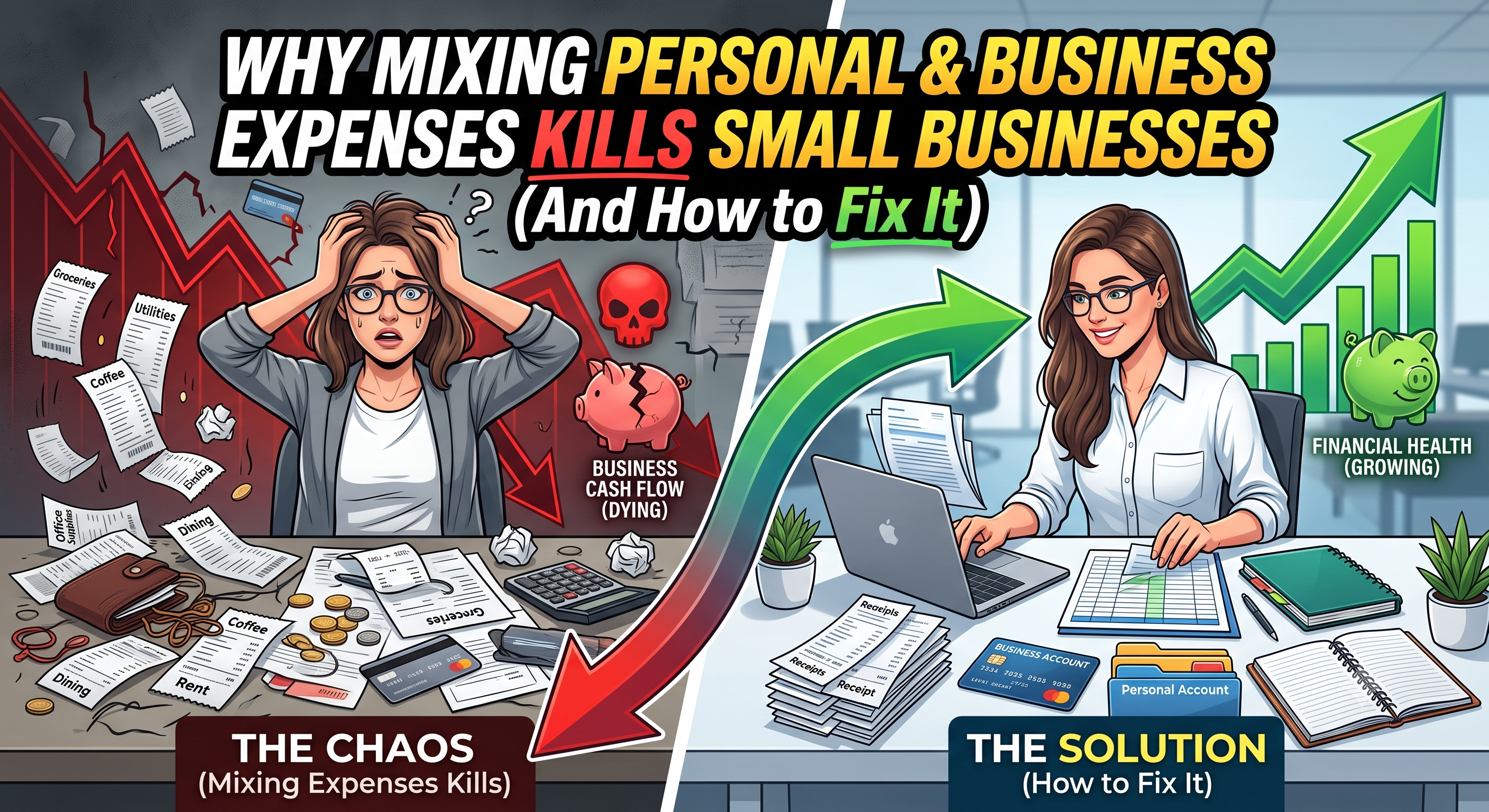
Swiping your personal credit card for business supplies might seem harmless, but mixing your funds can destroy your company. This habit—called commingling—exposes your personal savings to business lawsuits and creates chaos at tax time. Discover the hidden risks of blurring financial lines, learn what "piercing the corporate veil" means for your assets, and follow four simple steps to set up clean, protective accounting for your new business.
Using your personal card to buy business inventory—or buying groceries with your business account—is one of the fastest ways to destroy a small business.
It might feel convenient when you are just starting out. However, mixing these funds creates legal dangers, tax headaches, and financial blind spots that can crush your business before it grows.
Here is why keeping your finances separate is critical, and how you can fix it today.
1 What Is Commingling?
In accounting, mixing personal and business money is called commingling funds.
Commingling happens whenever money moves between your personal life and your business without a clear accounting record.
Both scenarios blur the line between you and your company.
2 The Legal Danger: Piercing the Corporate Veil
When you create an LLC or corporation, the law treats your business as a separate "person." This legal structure creates a protective wall—known as the corporate shield—between your business debts and your personal assets.
If your business gets sued or goes bankrupt, creditors can usually only take business assets. They cannot touch your personal home, car, or savings.
However, if you commingle funds, a court can order piercing the corporate veil. This technical term means a judge cancels your liability protection because you failed to treat the business as a separate entity.
Imagine a customer slips, falls, and sues your storefront for $100,000. During the lawsuit, the customer's lawyer reviews your bank statements. They show you frequently paid your home mortgage and streaming subscriptions directly from your business account.
Because you treated your business account like a personal piggy bank, the judge rules that your business is not truly separate. The corporate veil is pierced. Now, your personal savings account and home can be taken to pay the legal judgment.
3 Tax Season Chaos and Lost Money
Commingling funds turns tax season into a nightmare.
To lower your tax bill, you must claim legitimate business write-offs. When personal and business expenses are lumped together in one account, finding those write-offs requires sifting through hundreds of transactions line by line.
You risk two big problems:
4 How to Fix It: 4 Simple Steps
Protecting your business does not require a finance degree. You can clean up your accounting in four steps.
Open a Dedicated Business Checking Account
Never run business transactions through a personal account. Open a dedicated checking account strictly registered under your business name. Use this account for every business deposit and payment.
Get a Separate Business Credit Card
Apply for a card used exclusively for company purchases. If you cannot get a formal business card yet, dedicate one specific personal credit card solely to business expenses. Never use it for personal items.
Pay Yourself Correctly
Do not withdraw cash from the business whenever you need spending money. Instead, pay yourself a fixed amount on a regular schedule. Transfer funds from your business checking account to your personal checking account. Log this transfer in your records as an "Owner’s Draw" or payroll.
Use Basic Accounting Software
Cloud-based accounting software connects directly to your business bank account. It tracks incoming income and automatically categorizes expenses, keeping your records clean and tax-ready all year long.
Select the statements below that apply to your current business workflow:
Separate Funds Protect Your Future
Clean accounting is more than just bookkeeping. It is the legal shield that protects your home, your family, and your financial future. By separating your accounts today, you build a solid foundation that allows your new business to grow safely.
Lisa Belmonte, AFSP
Lisa is the founder and lead tax preparer at Belmoore Financial Solutions. With over a decade of experience, she helps individuals and small businesses in Lancaster, PA navigate complex tax situations with confidence.